BLOG: A view from Tasmania

There has been a growing if not vague and disconnected awareness here of the presence of toxins in the environment but nothing either informative or educational forthcoming from key authorities like public health.

In my daily to-ing and fro-ing around medical sites, community centres and chemist shops I see in detail the vast range of health care and risk avoidance topics selected for public education – smoking, bike riders use of helmets, falls avoidance, balanced diet, alcohol and smoking risks to baby during pregnancy, recognition of stroke onset symptoms, promotion of cancer screening tests, eye care, relaxation therapies, ADHD in children, epilepsy management, diabetes, a noticeable increase in aged care and mental health categories plus numerous government and non -government sources of help for different addictions and conditions.

Most are attractive, and well designed using easy to understand text and graphics – in short, inviting to one and all. Lots of duplication as you’d expect in the competitive world of health care and no doubt each publication uses up a fair chunk of annual budgets across the public health sector.

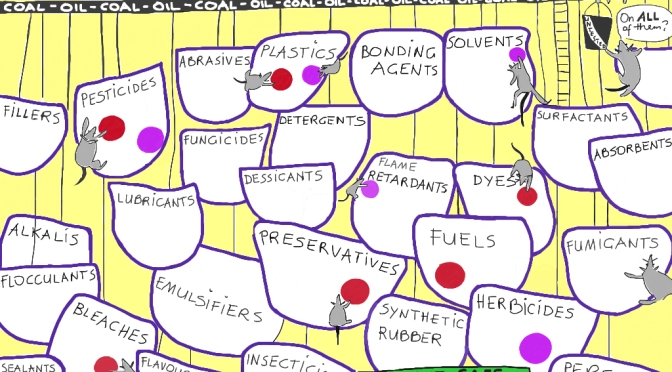
As we all know many standard and current Public Health messages are reinforced in other media from advertisements to documentaries. Apart from rarely reported incidences like toxic leakage from old mine sites affecting lead and mercury levels in a few very small settlements ( under 100 people) reports of which are one-day headlines, I truly think that given the fact of there being no authorized and coordinated public education program on environmental factors affecting health, it’s pretty amazing that there seems to be some level of general but unfocussed awareness of at least some environmental health risks in Tasmania. Until dots are joined up linking wild and aquatic life diseases, soil contamination from past manufacturing, overuse of herbicides, fungicides, pesticides etc to human health outcomes, it will remain so.

Known for green actions to save forests, whales, endangered wildlife species, coastal sites, and for increasing our numbers of national parks and world heritage sites, Tasmania is now a top tourist destination. Yet aside from some attention to health risks associated with fracking exploits, not one of these action organisations has included human life in its remit since they first fired up to save a wild river in 70s. One had a go in recent times but has since retired exhausted by the struggle.

It is quite odd to be living in such a naturally beautiful part of the world knowing it’s also an extremely toxic place from both past and present practices, and from where our now major industries of tourism and gambling lead to nought but smug complacency and bland denial of anything nasty in our ‘pristine environment’ among the too many grey suits running the show. Tasmania is also the poorest state with the highest levels of unemployment & illiteracy and numbers of people affected by chronic diseases.

I haven’t seen or heard of any health concerns from workers but that’s not to say they don’t exist since we are also handicapped by Murdoch controlled media in such matters.

Still, I live in hope!

Diana Ward
February 2016
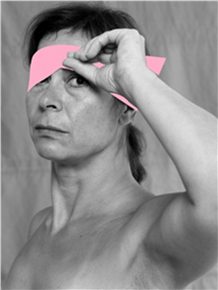
Press Release: Remove the Pink Ribbon Blindfold and Ask the Big Question.

Embargo 10 am 1st October

16 international organisations and national groups have signed on to the statement prepared by From Pink to Prevention campaign, which calls on breast cancer charities everywhere to remove their pink ribbon blindfolds and ask why, despite all the money raised, more and more of us are getting this disease? The groups believe we are not getting the full picture on this breast cancer epidemic that has taken us from a 1 in 12 chance of a woman getting the disease in her lifetime in 1995, to a 1 in 8 chance today.

On October 1st, a social media action aims to urge breast cancer charities along with the people who raise funds for the cause each and every year to remove their pink ribbon blindfolds. This action draws attention to the Big Question: why do most breast cancer charities persist in refusing to acknowledge the role of environmental and occupational toxicants by ignoring decades of evidence up to the present day on the link between our lifelong (womb to grave) exposures to toxics and the escalating incidence of breast cancer?

Speaking for From Pink to Prevention Helen Lynn stated: “Seeking better diagnostics and treatment is not mutually exclusive with acting upon the evidence that shows how our profoundly polluted environment, homes and workplaces impact on our bodies and health. The ‘Precautionary Principle’ must be applied to this issue. All women need and deserve a full understanding of all potential risk factors for the disease that threatens women’s lives and health. Breast cancer charities should be leading on this, not refusing to acknowledge the evidence that connects it”.

Each October international funding in the hundreds of millions is raised for breast cancer ‘awareness’. Yet too many Breast Cancer Charities do not acknowledge the environmental and occupational risk factors for breast cancer, when the evidence is already abundant. Instead, prevention is focused solely on ‘lifestyle’ risk factors such as diet and exercise, while ignoring the potential 60% of breast cancer cases that remain unexplained by the commonly accepted risk factors alone. There is a deafening silence in breast cancer awareness campaigns about the role of chemical, environmental and occupational exposures for breast cancer. Internationally, less than 4% of the global research spending on breast cancer is spent on research into primary prevention of breast cancer and only 2% on exogenous (external) factors like chemical exposure.

Gayle Sulik from Breast Cancer Consortium points out: “The Breast Cancer Consortium highlights that diagnosis and treatment are important, but focusing solely on these aspects of the continuum of care — as most breast cancer awareness initiatives do– will not address the breast cancer epidemic at large.”

The World Health Organisation states that prevention (which is not the same as early detection) offers the most cost-effective long-term strategy for the control of cancer. However, we do not see this fact reflected in most cancer plans and strategies. We, and the organisations that stand with us, want to see primary prevention (stopping the disease before it starts) equally addressed along with better treatment and care. We demand that those with the power to do so act on what we already know about the links between breast cancer and environmental and occupational exposures.

Gudrun Kemper from Breast Cancer Action Germany says: “As many millions of women are already hyperaware of breast cancer. There is no more need for any pink breast cancer awareness. What is now needed is a fuller more complete picture. Maybe it’s time to change the name of the month to Breast Cancer Prevention Month”.

From Pink to Prevention Campaign aims to move the breast cancer agenda from Pink to Prevention. Stopping Breast Cancer before it Starts.

Signatories

Alliance for Cancer Prevention: Helen Lynn – http://www.allianceforcancerprevention.org
Brighton Breast Cancer Action: https://brightonbca.wordpress.combrightonbca@gmail.com
Breast Cancer Consortium: Gayle Sulik – http://www.breastcancerconsortium.net
Breast Cancer Action Germany: Gudrun Kemper – www.bcaction.deinfo@bcaction.de
Breast Cancer Fund: Jeanne Rizzo, RN CEO and President
www.breastcancerfund.org
Challenge Breast Cancer Scotland: Moira Adams – http://www.challengebreastcancerscotland.org/
European Work Hazards Network: Kathy Jenkins – www.ewhn.eu
From Pink to Prevention: Di Ward – diward@frompinktoprevention.org
Hazards Campaign: Hilda Palmer – hilda@gmhazards.org.uk
Hazards Magazine: Rory O’Neill – editor@hazards.org
Onco Grrrls: oncogrrrls@gmail.comhttp://oncogrrrl.blogspot.co.uk/
Philippine Breast Cancer Network: Danny Meneses – President – pbcn@iname.comhttp://www.pbcn.org
Scottish Hazards Campaign: http://www.scottishhazards.co.uk
The Furious Amazons (Le Amazzoni Furiose): Grazia De Michele – graziademichele@googlemail.com
Tipping Point North South: Deborah Burton – deborah@tippingpointnorthsouth.org
Women in Europe for a Common Future: Sascha Gabizon – sascha.gabizon@wecf.eu

Notes to Editor:

  1. Overview of some of the scientific evidence on the links between breast cancer and environmental and occupational risk factors.
  2. Some key facts on the escalating incidence of breast cancer.
  3. Research paper: Sutton, P. California Breast Cancer Prevention Initiatives: Setting a research agenda for prevention. Reproductive Toxicology 54 (2015) 11–18.
  4. World Health Organisation – Asturias Declaration.
  5. A continually-updated, annotated bibliography of occupational cancer research produced. http://cancerhazards.org/
  6. Remove the Pink Ribbon Blindfold Petition.
  7. Information for action on removing the pink ribbon blindfold.
  8. Flickr group.

For More Information

Helen Lynn (UK) : +44(0)7960 033687
Deborah Burton (UK) : +44(0)7779 203455
Diana Ward (AU) : +61(0)400640144
info@frompinktoprevention.org


OCTOBER – BREAST CANCER PREVENTION/AWARENESS MONTH

In the forthcoming Breast Cancer Awareness Month we ask if you can remove the Pink Ribbon ‘Blindfold’ and ask this BIG QUESTION of the Breast Cancer Charities:

WHY do they persist in refusing to acknowledge the role of environmental and occupational toxicants by  ignoring decades of evidence up to the present day on the link between our lifelong (womb to grave) exposures to toxics and the escalating incidence of breast cancer?

Why do Breast Cancer Charities continue to focus solely on ‘lifestyle’ risk factors such as diet and exercise, while ignoring the potential 60% of breast cancer cases for which they have no explanation. What about the role of chemical, environmental and occupational exposures in this?

Better diagnostics and treatment is not mutually exclusive with looking at how our profoundly polluted environment, homes and workplaces impact on our bodies and health, while also taking into consideration the ‘precautionary principle’ – ie better safe than sorry.

The World Health Organisation states that prevention (which is not the same as early detection) offers the most cost-effective long-term strategy for the control of cancer. So why do we not see this reflected in our cancer plans and strategies? Why is primary prevention (stopping the disease before it starts) not equally addressed along with better treatment and care? Why are those with the power to influence decisions on breast cancer policy not acting on what we already know?

Join us this October in removing the pink ribbon blindfold and asking the Breast Cancer Charities the Big Question:

WHY they persist in refusing to acknowledge the role of environmental and occupational toxicants by ignoring decades of evidence up to the present day on the link between our lifelong (womb to grave) exposures to toxics and the escalating incidence of breast cancer.
Continue reading OCTOBER – BREAST CANCER PREVENTION/AWARENESS MONTH

Press Release: Open letter to Breakthrough (Breast Cancer Now)

Press Release: 16/6/15

Open letter to Breakthrough Breast Cancer (Breast Cancer Now)

An open letter sent to Breakthrough Breast Cancer (now called Breast Cancer Now) calls on them to review their public literature and acknowledge the environmental and occupational links to breast cancer.

The letter signed by concerned organisations and scientists and addressed to Baroness Morgan expresses the hope and expectation that the merger between Breakthrough and Breast Cancer Campaign affords a timely opportunity for the new organisation, under her leadership, to make progressive changes to breast cancer prevention policies.

The signatories include Breast Cancer Consortium, Brighton Breast Cancer Action, Challenge Breast Cancer Scotland,  From Pink to Prevention, the Hazards Campaign, the Health and Environment Alliance EU, Dr. Jim Brophy and Dr. Margaret Keith and the Women’s Environmental Network Scotland.

Specifically in relation to incidence, risk and prevention of breast cancer, we hope that future prevention policies will include the previously downgraded or overlooked roles of environmental and occupational risk factors in breast cancer.

The open letter calls upon Breakthrough (Breast Cancer Now) as a leading voice on the management, treatment and prevention of breast cancer in the UK, to use its public and political influence to shape a new vision for breast cancer policy; one that, from a more advanced and informed 21st century position regarding prevention, leads the cancer charity sector by:

  • acknowledging environmental and occupational links to breast cancer
  • acting upon environmental and occupational risk factors for breast cancer
  • embracing the precautionary principle as fundamental to all future work on the disease
  • making reference to the attached scientific reports and statements in the literature review for future public documents on breast cancer risk
  • providing fully referenced sources in all your future public information documents.

The signatories were gravely concerned to discover that in its public literature Breakthrough neither uses the term nor acknowledges the existence of Endocrine Disrupting Chemicals (EDCs) and, even more importantly, their role in breast cancer.

We are not alone in our view that EDCs are one of the biggest public health threats of this century. The World Health Organization (WHO) and United Nations Environment Programme (UNEP) say EDCs are a global threat to health and the environment that needs to be resolved as soon as possible. An overview of the multiple scientific reports on the issue was sent along with the letter.

We believe that action on EDCs goes hand in hand in hand with the precautionary principle which in the response to our initial letter we were told: “We do not believe the balance of evidence currently supports the adoption of a precautionary principle at this time in the UK. (Letter from former CEO of Breakthrough Chris Askew February 2015)”

The UK is legally committed to the precautionary principle through its signature on a number of UN treaties including the United Nations Framework Convention on Climate Change and the Rio Declaration and subsequent Agenda 21. In choosing not to support the European-wide move for the adoption of ‘Precautionary Principle’ policies to protect humans, wildlife and the environment from the harmful effects of man-made toxics (CMRs and EDCs), we believe that Breakthrough is by-passing an opportunity, not only to broaden the scope of its prevention agenda, but also to make an immeasurably valuable contribution to preventive health in the UK. (April letter 2015)

From Pink to Prevention (FPTP) has been in correspondence with Breakthrough Breast Cancer since 2014 because of statements made and conclusions drawn in their booklet Breast cancer risk – the facts. The booklet was due for reprint last year so FPTP took the opportunity to write and ask about some of the assumptions.

Primarily the ‘fact’ that in the booklet risk of breast cancer from exposures via our environment or workplace fall into the same risk category as bumping your breast or wearing an underwire bra. FPTP were also quite shocked to discover that lifelong exposure to harmful chemicals in our environment and workplaces was dismissed as scientifically unproven or lacking in sufficient evidence to warrant it being considered a risk factor or unlikely to affect risk of breast cancer.

FPTP sent initial letter in December 2014 asking for the literature review that formed the basis for Breakthrough’s booklet. We received a reply from the then CEO Chris Askew in February along with the literature review for the booklet.

In the meantime Breakthrough and Breast Cancer Campaign amalgamated to form Breast Cancer Now and Baroness Delyth Morgan has returned to become CEO of the newly formed charity so we redirected our reply to Chris Askew’s letter to Baroness Morgan.

The subsequent open letter reflects international concern in relation to the lack of attention paid to environmental and occupational risk factors for breast cancer and primary prevention. We hope to see some progressive work from this newly formed charity and await a positive response to our letter.

Contact details: Helen Lynn (07960033687) Deborah Burton (07779 203455)

PDF of Press Release

Notes to editor:

  1. In campaigning to move the breast cancer agenda from Pink to Prevention the FPTP campaign team is pre-occupied with one BIG fundamental question. The correspondence with Breakthrough was initiated by FPTP because of the public information booklet, ‘Breast cancer risk – the facts’. This has become the first target for the BIG question that underpins the objectives of our campaign – to expose the barriers to preventive  measures for the major cancer affecting women worldwide.
  2. An endocrine disruptor is an exogenous chemical or mixture that interferes with any aspect of hormone action.


Aunty’s rules

ON PRODUCT LABELS  

Aunty says: When I go shopping I always follow a few basic rules.

IF:

  • there is NO LIST of ingredients on a product
  • the ingredients list is Impossible to SEE because of the colour used e.g. white on yellow,
  • the words are so small it’s impossible to READ the ingredients list without a large magnifying glass
  • I need a degree in chemistry in order to UNDERSTAND the ingredients list

I choose NOT to buy that product (or any other products from that brand range) because I believe I have the right to know what’s in EVERY product I wish to purchase without the need of a magnifying glass or a chemistry degree.
Continue reading Aunty’s rules

INTRODUCING AUNTY – your personal guide to shopping for safe products

AUNTY SAYS

Until governments formulate legislation enforcing retailers and manufacturers to provide full information regarding the ingredients in the products they make and sell, let’s get on with the job ourselves of:

  • becoming ‘informed’ consumers
  • rejecting certain products known to contain toxics
  • rejecting certain brand names known to use toxics in their products
  • letting retailers, manufacturers and corporate brands know what we don’t want, through our combined purchasing power.

Continue reading INTRODUCING AUNTY – your personal guide to shopping for safe products

Stopping Breast Cancer Before It Starts. From Pink to Prevention asks breast cancer charities, government and industry to act upon the evidence linking environmental and occupational links to breast cancer.