
Category Archives: Breast cancer

Blog: Meeting with Breast Cancer Now (BCN)

It was good for the From Pink to Prevention team to meet face to face finally, in February, with senior staff at Breast Cancer Now to discuss our concerns about BCN’s Risk Booklet.

BCN’s priority areas are to do with medical research linked to lifestyle factors – factors they can identify and act upon with speed and while we fully appreciate their remit, we made it clear that we very much want BCN to start to – incrementally at least to begin with – make significant progress on the referenced inclusion of environmental and occupational risks for breast cancer in their booklet. This is relevant to both BCN’s target 42% of women for whom lifestyle risk is their priority to address, as well as the remaining 58% , for many of whom the reason for getting the disease remains unknown.

One of our main concerns was that the literature review references sent to us on which the updated Risk booklet dated July 2015 was based and assessed had no references post 2010. This was a stunning revelation given the significant level of research that has happened over the last six years, much of it ground breaking in terms of the prestigious institutions that have broken the silence and finally acknowledged the environmental and occupational links to breast and other cancers. Far from revealing new information, a significant proportion of the research has consolidated what we already knew or suspected about breast cancer, that it is not all down to lifestyle risk factors alone. In fact links with environmental and occupational exposures appear to contribute to some of the so-called lifestyle risk factors such as obesity and diet.

Even research prior to 2010 upheld the links between environmental and occupational exposures and breast cancer which begs the question of BCN as to why both these risk factors were listed under a ‘factors unlikely to increase risk’ or ‘does not affect risk section’ of their booklet. It is our firmly held view that public information on risk assessment needs to be based on up to date 21st century science even if it is felt by BCN that there is a lack of clarity for them on the issue.

We went through their Risk Brochure in detail in order to unpack our concerns with some of the statements in it (particularly on pages 45 and 47, which we looked at in detail in the meeting).

Since the meeting, we’ve asked BCN to provide an online downloadable list of all the references with a fully referenced copy of the booklet; an upgrade of the category chemicals in the environment to either increases risk or placed alongside shift work in the possibly increases risk category. A copy of the letter we sent to BCN  with this request can be seen here.

At the meeting we made the case that the category of chemicals in the environment should most definitely not remain in the same category as under wire bras, especially as ‘the environment’ appears to include workplace environment in their booklet.

Relating to the shift work issue, we suggested removing the para referring to the unhealthy diets of women who do shift work as we all agreed, it confounds the issue of ‘risk’ and is supposition unsupported by research. Also, the reference to women working in the manufacturing industry needed to be qualified and referenced as this could lead to millions of women working in manufacturing questioning whether this referred to their industry or not.

We were asked for evidence/environmental studies relating to elevated levels of oestrogen and breast cancer and referred BCN to the Silent Spring Institute which has conducted numerous studies in relation to Cape Cod and the pollution linked with breast cancer there; to the reports listed in our From Pink to Prevention  document on the scientific evidence; to the Endocrine Society which has produced two recent statements on the issue and finally to The Endocrine Disruption Exchange (TEDx),  ( the brainchild of Theo Colborn who wrote Our Stolen Future) which contains a listing of known, suspected and probable EDCs.

We concluded by agreeing that, like BCN, we too want to see no life lost to breast cancer and that the addressing of lifestyle factors in isolation will not achieve this goal.

We emphasised that lifelong and pre-birth exposure to toxic chemicals must be fully acknowledged as a risk factor for breast cancer and therefore an equally integral part of all cancer primary prevention strategies and actions.  Indeed we want to see no woman having to go through a diagnosis of breast cancer in the first place. As Diana Ward couldn’t be with us (living in Tasmania as she does!) we ended with her very succinct call upon BCN:

The BCN Information booklet about risk factors for BC, now in its 5th edition, cannot stand as a valid, reliable and up to date source of risk information for women until and unless the conclusions it contains are substantiated by references that truly reflect the latest scientific advances in identifying both proven and potential risks, either throughout the text or fully appended by section and number at end of booklet.

From Pink to Prevention is calling upon all breast cancer charities – not just BCN – to acknowledge and act upon environmental and occupational risk factors for the disease. This is also an international issue and campaign and we look forward to building on our work started last year, when 16 international organisations signed our open letter calling on breast cancer charities everywhere to remove their pink ribbon blindfolds and ask why, despite all the money raised, more and more of us are getting this disease? The groups believe we are not getting the full picture on this breast cancer epidemic that has taken us from a 1 in 12 chance of a woman getting the disease in her lifetime in 1995, to a 1 in 8 chance today. We need  urgent action now.

From Pink to Prevention February 2016
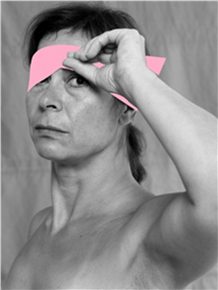
Press Release: Remove the Pink Ribbon Blindfold and Ask the Big Question.

Embargo 10 am 1st October

16 international organisations and national groups have signed on to the statement prepared by From Pink to Prevention campaign, which calls on breast cancer charities everywhere to remove their pink ribbon blindfolds and ask why, despite all the money raised, more and more of us are getting this disease? The groups believe we are not getting the full picture on this breast cancer epidemic that has taken us from a 1 in 12 chance of a woman getting the disease in her lifetime in 1995, to a 1 in 8 chance today.

On October 1st, a social media action aims to urge breast cancer charities along with the people who raise funds for the cause each and every year to remove their pink ribbon blindfolds. This action draws attention to the Big Question: why do most breast cancer charities persist in refusing to acknowledge the role of environmental and occupational toxicants by ignoring decades of evidence up to the present day on the link between our lifelong (womb to grave) exposures to toxics and the escalating incidence of breast cancer?

Speaking for From Pink to Prevention Helen Lynn stated: “Seeking better diagnostics and treatment is not mutually exclusive with acting upon the evidence that shows how our profoundly polluted environment, homes and workplaces impact on our bodies and health. The ‘Precautionary Principle’ must be applied to this issue. All women need and deserve a full understanding of all potential risk factors for the disease that threatens women’s lives and health. Breast cancer charities should be leading on this, not refusing to acknowledge the evidence that connects it”.

Each October international funding in the hundreds of millions is raised for breast cancer ‘awareness’. Yet too many Breast Cancer Charities do not acknowledge the environmental and occupational risk factors for breast cancer, when the evidence is already abundant. Instead, prevention is focused solely on ‘lifestyle’ risk factors such as diet and exercise, while ignoring the potential 60% of breast cancer cases that remain unexplained by the commonly accepted risk factors alone. There is a deafening silence in breast cancer awareness campaigns about the role of chemical, environmental and occupational exposures for breast cancer. Internationally, less than 4% of the global research spending on breast cancer is spent on research into primary prevention of breast cancer and only 2% on exogenous (external) factors like chemical exposure.

Gayle Sulik from Breast Cancer Consortium points out: “The Breast Cancer Consortium highlights that diagnosis and treatment are important, but focusing solely on these aspects of the continuum of care — as most breast cancer awareness initiatives do– will not address the breast cancer epidemic at large.”

The World Health Organisation states that prevention (which is not the same as early detection) offers the most cost-effective long-term strategy for the control of cancer. However, we do not see this fact reflected in most cancer plans and strategies. We, and the organisations that stand with us, want to see primary prevention (stopping the disease before it starts) equally addressed along with better treatment and care. We demand that those with the power to do so act on what we already know about the links between breast cancer and environmental and occupational exposures.

Gudrun Kemper from Breast Cancer Action Germany says: “As many millions of women are already hyperaware of breast cancer. There is no more need for any pink breast cancer awareness. What is now needed is a fuller more complete picture. Maybe it’s time to change the name of the month to Breast Cancer Prevention Month”.

From Pink to Prevention Campaign aims to move the breast cancer agenda from Pink to Prevention. Stopping Breast Cancer before it Starts.

Signatories

Alliance for Cancer Prevention: Helen Lynn – http://www.allianceforcancerprevention.org
Brighton Breast Cancer Action: https://brightonbca.wordpress.combrightonbca@gmail.com
Breast Cancer Consortium: Gayle Sulik – http://www.breastcancerconsortium.net
Breast Cancer Action Germany: Gudrun Kemper – www.bcaction.deinfo@bcaction.de
Breast Cancer Fund: Jeanne Rizzo, RN CEO and President
www.breastcancerfund.org
Challenge Breast Cancer Scotland: Moira Adams – http://www.challengebreastcancerscotland.org/
European Work Hazards Network: Kathy Jenkins – www.ewhn.eu
From Pink to Prevention: Di Ward – diward@frompinktoprevention.org
Hazards Campaign: Hilda Palmer – hilda@gmhazards.org.uk
Hazards Magazine: Rory O’Neill – editor@hazards.org
Onco Grrrls: oncogrrrls@gmail.comhttp://oncogrrrl.blogspot.co.uk/
Philippine Breast Cancer Network: Danny Meneses – President – pbcn@iname.comhttp://www.pbcn.org
Scottish Hazards Campaign: http://www.scottishhazards.co.uk
The Furious Amazons (Le Amazzoni Furiose): Grazia De Michele – graziademichele@googlemail.com
Tipping Point North South: Deborah Burton – deborah@tippingpointnorthsouth.org
Women in Europe for a Common Future: Sascha Gabizon – sascha.gabizon@wecf.eu

Notes to Editor:

  1. Overview of some of the scientific evidence on the links between breast cancer and environmental and occupational risk factors.
  2. Some key facts on the escalating incidence of breast cancer.
  3. Research paper: Sutton, P. California Breast Cancer Prevention Initiatives: Setting a research agenda for prevention. Reproductive Toxicology 54 (2015) 11–18.
  4. World Health Organisation – Asturias Declaration.
  5. A continually-updated, annotated bibliography of occupational cancer research produced. http://cancerhazards.org/
  6. Remove the Pink Ribbon Blindfold Petition.
  7. Information for action on removing the pink ribbon blindfold.
  8. Flickr group.

For More Information

Helen Lynn (UK) : +44(0)7960 033687
Deborah Burton (UK) : +44(0)7779 203455
Diana Ward (AU) : +61(0)400640144
info@frompinktoprevention.org


OCTOBER – BREAST CANCER PREVENTION/AWARENESS MONTH

In the forthcoming Breast Cancer Awareness Month we ask if you can remove the Pink Ribbon ‘Blindfold’ and ask this BIG QUESTION of the Breast Cancer Charities:

WHY do they persist in refusing to acknowledge the role of environmental and occupational toxicants by  ignoring decades of evidence up to the present day on the link between our lifelong (womb to grave) exposures to toxics and the escalating incidence of breast cancer?

Why do Breast Cancer Charities continue to focus solely on ‘lifestyle’ risk factors such as diet and exercise, while ignoring the potential 60% of breast cancer cases for which they have no explanation. What about the role of chemical, environmental and occupational exposures in this?

Better diagnostics and treatment is not mutually exclusive with looking at how our profoundly polluted environment, homes and workplaces impact on our bodies and health, while also taking into consideration the ‘precautionary principle’ – ie better safe than sorry.

The World Health Organisation states that prevention (which is not the same as early detection) offers the most cost-effective long-term strategy for the control of cancer. So why do we not see this reflected in our cancer plans and strategies? Why is primary prevention (stopping the disease before it starts) not equally addressed along with better treatment and care? Why are those with the power to influence decisions on breast cancer policy not acting on what we already know?

Join us this October in removing the pink ribbon blindfold and asking the Breast Cancer Charities the Big Question:

WHY they persist in refusing to acknowledge the role of environmental and occupational toxicants by ignoring decades of evidence up to the present day on the link between our lifelong (womb to grave) exposures to toxics and the escalating incidence of breast cancer.
Continue reading OCTOBER – BREAST CANCER PREVENTION/AWARENESS MONTH